“[W]riters who perpetuate mistakes out of ignorance are to be pardoned and gently corrected, while those who do so deliberately should be condemned without mercy.” – Polybius, The Histories, 12.7.
- Adam Gopnik, writing for The New Yorker, has a piece on some recent scholarship concerning the apostle Paul, including the recently edited volume Paul within Paganism (Fortress Press, 2025). I read it through my Apple News subscription, but you can find it on The New Yorker‘s website.
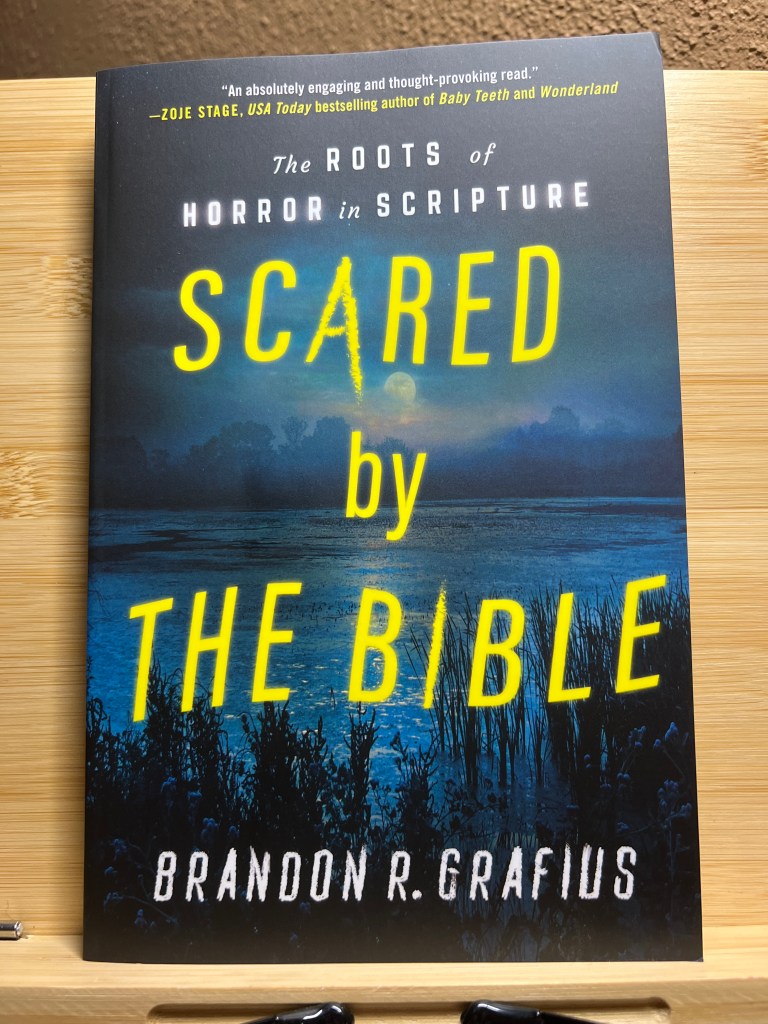
- I recently got my hands on Brandon Grafius’ latest and I hope to have a review out for it around Halloween of this year. (I have a lot of reading to get through between now and then so we will see.)
- David Litwa responds to Michael Bird’s review of Litwa’s Marcion: Gospel of a Wholly Good God. It’s a doozy!
- If you’re needing some reading material, Matthijs den Dulk’s Ethnic Stereotypes and the Letters of Paul is available for a free download!
- Paul Davidson looks at Revelation 13’s weird beasts and fleshes out the Jewish and pagan sources that stand behind it. He likens it to an Avengers film where various characters make cameos.
- Sarah Emanuel talks with Ryan Lambert about her recent book Wrestling with Paul. I hope to get my hands on this one soon and offer a review. In the meantime, here is an excellent interview with Emanuel.
- Gregory Paulson talks about UBS 6th edition of the Greek New Testament and some significant changes from the 5th edition. For example, the Pauline corpus is placed after the Catholic Epistles. (If you use Tyndale House’s Greek NT this shouldn’t be an issue.)
- Robyn Walsh talks about the origin of the Gospels with CJ Cornwaithe.
 The Amateur Exegete
Thanks for another weekly round-up.
I read Paul’s write-up on Revelation 13 earlier this week and really enjoyed it.
And the back-and-forth between Litwa and Michael Bird reminds me of the time I read a piece by Bird on the Gospel of Luke trying to portray it as “proto-feminist.” He made some rather dubious claims but it at least gave me some insight into his apologetics and how he typically operates.
The work on the apostle Paul by den Dulk looks kind of interesting since some of the ethnic stereotypes in the New Testament tend to be overlooked by scholars. But Jesus in the gospels and Paul both talk about “gentiles” as people who engage in sinful acts to be avoided by the righteous: it’s almost as if they employ the term as a belittling benchmark to say that those who don’t follow certain teachings are no “better” than foreigners.
Honestly, Paul is kind of a controversial figure in my mind for both Jews and non-Jews: his work has historically been employed for anti-Semitic purposes but he appears to maintain in certain passages (e.g. Romans 1) that gentiles are responsible for their ignorance of the faith in spite of never having received the revelations from God that the prophets of the Old Testament did.
The fact that the core tenets of Christianity have never been derived independently by various cultures (for example, the Pre-Colombian civilizations of the Americas) and yet Christians still hold them to be somehow condemned was one of the early reasons for my becoming a skeptic: A God who privileges one group with the teachings requisite for being saved and requires the work of missionaries and the flawed transmission of holy writ for reaching the others seems to be playing favorites.
-J Source
LikeLike