“Memories need to be shared. When you hoard memories, they become heavy and sour. Shared, they have you walking on air, because they’re alive somehow.” – Jared Roberts, The Machine Stories: From the Hidden Webpage to Sunburn (self-published, 2024), 180.
- The latest Journal for the Study of the New Testament is out and there are a couple of open-access articles that look promising, including Tim Carter’s “A Tomb Fit for a Prophet: An Investigation into the Historical Plausibility of the Gospel Burial Accounts.”
- Robyn Walsh discusses Christian identity – Who counted as a “Christian” and who decided that? – especially in relation to Christ-followers of the first-century, including Paul.
- Paul Davidson talks about the trees of Eden. If you’re not a subscriber to Davidson’s channel, you’re really missing out.
- Shauna Strauch-Schick looks at ideas of conception in the Hebrew Bible, particularly as it pertains to what exactly women were thought to contribute to it. I learned quite a bit from this one.
- Ian Mills has an open access piece on Paul’s letter to the Laodiceans. (If you haven’t read Mills’ The Hypothesis of the Gospels, you should stop what you’re doing and go get it.)
- BJ Oropeza looks at the Saul-to-Paul shift we find in the Acts of the Apostles. No, it’s not because Paul “converted” (he didn’t).
- CJ Cornwaite went on the Bible and Archaeology channel to talk about the Acts of the Apostles.
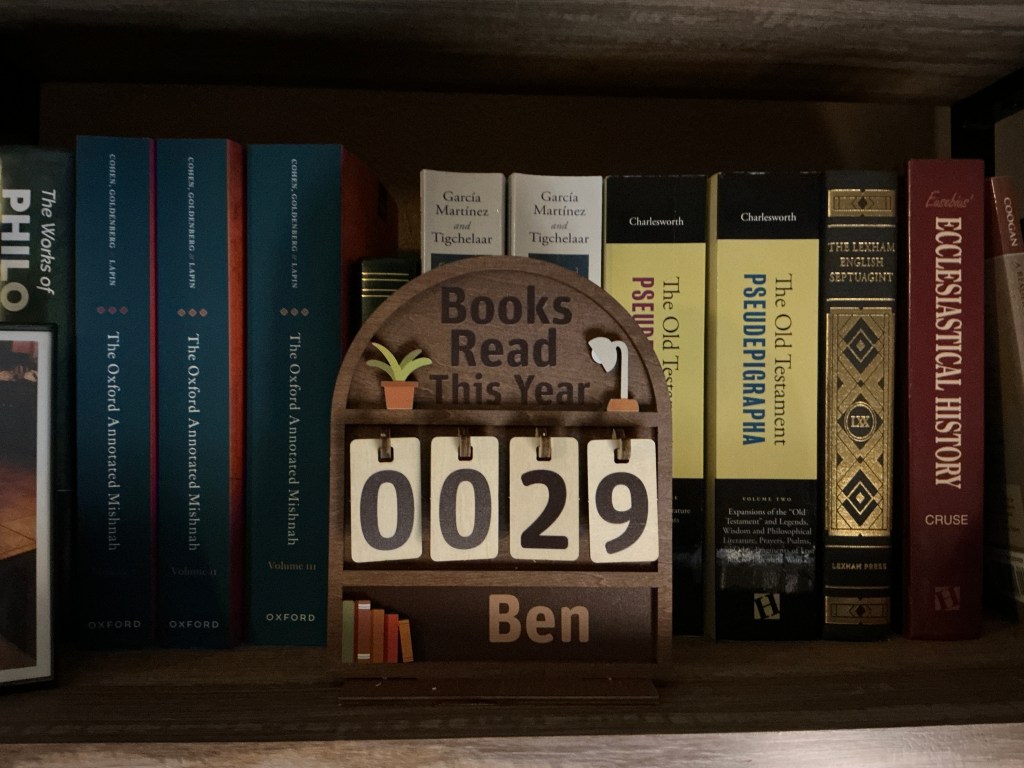
- 29 down, 23 to go!


Thanks for the newest round-up.
Ian Mills’ work looks interesting- might have to add that to my reading list.
Regarding the whole biblical thought process behind what happened during conception, it’d be interesting to compare the Hebrew Bible (and maybe the New Testament) to some of the stories from Mesopotamian myth. I don’t remember the exact names of the deities but there is one story where an unmarried god travels to meet the queen of the underworld and he is eventually seduced, leading to his having to take her as his bride. But there is an unusual figure of speech in which she talks about his action as if he, erm, planted “a seed” in her and she can’t help longing for him.
LikeLiked by 1 person